Quantum Computing and Insurance Risk
I Spent a Month Learning About Quantum Computing So You Don’t Have To (But Maybe You Should)
Why I Even Started Paying Attention
I’m the type of guy who can’t even set up his own printer, and here I am writing about something I didn’t even know existed a month ago.
Hi. I’m Wayne Watley with Watley Insurance Group in Shreveport, Louisiana.
I’m an insurance agent. Not a physicist. Not a technologist. Definitely not someone who normally spends evenings reading about qubits and error rates.
But last month, I went down a rabbit hole that started with a single video about energy constraints in AI and ended with me rethinking how the insurance industry understands risk.
This isn’t a technical explainer. I can’t teach you how quantum computers work because I barely understand them myself. This is a first-person account of what I learned, what confused me, what turned out to be hype, and what actually matters if you work in insurance.

Why Quantum Felt Different Than Other “Game Changers”
I do this with everything that sounds like it might change the world. AI. Blockchain. Insurtech platforms.
Most of the time, a few minutes of digging tells me it’s a nothing burger. Something that sounds impressive but changes very little on the ground.
Quantum computing felt different.
Not because of the hype. The hype actually made me skeptical. What caught my attention was that the conversation wasn’t about making computers faster or AI smarter. It was about hitting a physical wall.
Energy. Heat. Efficiency.
Those aren’t software problems you fix by stacking more GPUs in a data center. They’re physics problems.
Once I understood that classical computing is starting to hit real-world energy limits, quantum stopped sounding like science fiction and started sounding like a possible direction, whether we like the timeline or not.
The Moment It Stopped Being Abstract
The shift happened when I stopped thinking about technology and started thinking about my work.
Insurance is always behind. I see it every day.
A client’s situation doesn’t change. Same house. Same roof. Same maintenance. No claims. Then renewal hits and the premium jumps hard or they get non-renewed.
When we dig into it, the issue usually isn’t the individual risk. It’s that the carrier suddenly realized a whole region, construction type, or exposure stack is riskier than they thought.
That tells me the system didn’t really understand the risk until after damage had already occurred.
Weather patterns, building materials, labor costs, infrastructure age, population density, supply chain issues. These variables interact with each other. Today’s systems simplify that complexity because they have to.
They bucket risk, average outcomes, and rely on assumptions.
That works for a while, until reality drifts far enough that the math breaks.
When it does, you see underwriting freezes, broad non-renewals, and rate shock.

What I Got Embarrassingly Wrong at First
At first, I lumped quantum computing in with every other shiny buzzword.
Time travel. Glowing servers. Hand-wavy explanations.
I assumed it was just another way to say “faster computers” or “smarter AI,” which usually means marginal improvements wrapped in big language.
What I got wrong was assuming it was about novelty or speed.
It wasn’t really about making AI cooler. It was about running into limits that current systems can’t push past, especially around energy and efficiency.
The embarrassing part is that I dismissed it before asking what problem it was actually trying to solve.
Once I reframed it that way, everything else changed.
The Hype Detection Framework I Developed
After getting burned by enough tech trends, I’ve learned to watch for red flags.
The biggest one is when quantum is presented as a magic upgrade. If the claim sounds like it will make everything faster, cheaper, and smarter all at once, I tune out.
That usually means someone is selling excitement instead of explaining constraints.
Real progress sounds boring and narrow. It comes with timelines, tradeoffs, and uncertainty.
Another red flag is skipping the physics entirely. If there’s no discussion of energy, error rates, or stability, it’s probably marketing.
As of today, quantum computing sits firmly in the Noisy Intermediate-Scale Quantum era. Systems with dozens to a few hundred qubits, high error rates, and limited scalability.
That matters, because it means this isn’t about overnight transformation.
The Three Things That Actually Matter for Insurance
Once I stripped away novelty and jargon, three things rose to the top. Everything else was optional.
Earlier and Clearer Understanding of Risk
Insurance struggles not because it lacks data, but because it recognizes risk too late.
Losses happen. Models update. Rates spike.
Any technology that shortens that gap matters. Anything that adds complexity without improving timing does not.
Stability Over Precision
A lot of tech promises better accuracy. From where I sit, stability is what builds trust.
Clients don’t expect perfection. They expect fewer surprises.
If better computing leads to smoother adjustments instead of panic-driven swings, that’s progress.
Explainability
Better models are useless if no one can explain the outcome.
Insurance already struggles with the “because the model says so” problem.
If advanced tools make decisions harder to explain, they make the system feel less trustworthy, not more.
The Question That Still Keeps Me Up
The biggest unresolved question for me isn’t the technology. It’s how this actually shows up downstream.
Does it meaningfully integrate into carrier workflows and agent conversations? Or does it stay buried at the modeling layer where agents and clients never really see it?
If the math gets better but the explanations don’t, the experience may feel unchanged.
That gap concerns me.
How I’m Preparing to Talk About This With Clients
I’m not walking into client meetings trying to teach quantum computing.
I lead with outcomes. Stability. Clarity. Fewer surprises.
If the conversation goes there, I explain it as a long-term shift. Not a product. Not a feature. Not something affecting their renewal next month.
My best test case is my mom, who is also my client. If I can explain it to her without losing her, I know I’m on the right track.
No buzzwords. No promises.
What I Hope Happens Next
I’m not going to pretend this is purely altruistic.
Part of me hopes this leads to bigger conversations and bigger rooms. But more than that, I want other local agents to stop feeling like they’re slowly being pushed to the margins.
I still believe agents matter. That role just looks different now.
Concierge service isn’t about being friendly. It’s about understanding what’s changing and helping clients make sense of it.
If this content helps agents think differently about their role, that’s a win.
The Invitation
You don’t need to become a quantum computing expert. I certainly didn’t.
But if you work in insurance, you should probably pay attention to the constraints the industry is running into.
Risk is getting more complex. Models are lagging. Volatility is eroding trust.
Those aren’t future problems. They’re today problems.
That’s the conversation I’m interested in having.
About the Author
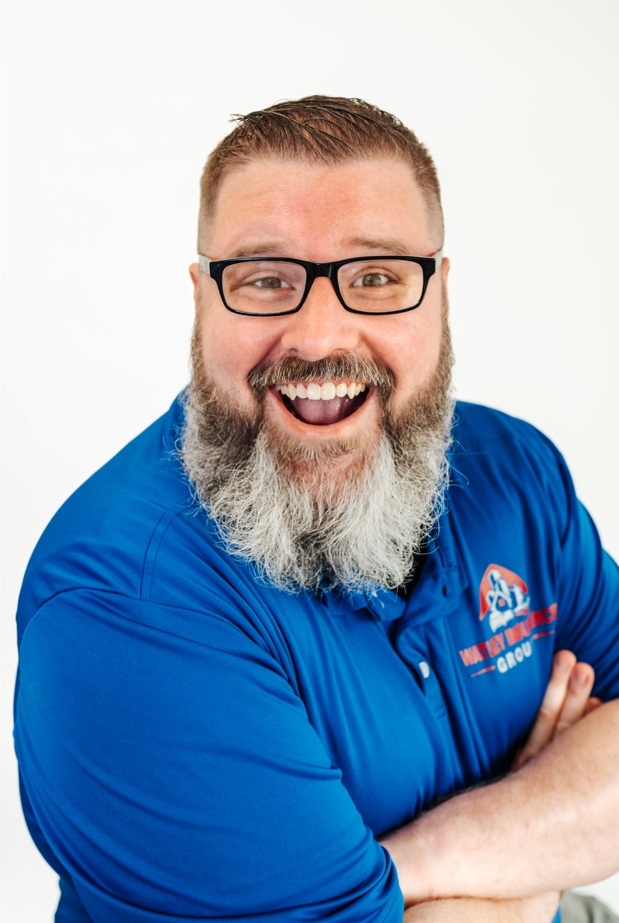
Wayne Watley is an independent insurance agent based in Shreveport, Louisiana and the owner of Watley Insurance Group. He works with individuals and business owners across the Ark-La-Tex region, helping them understand risk before it turns into surprise costs.
